
A Practical Calendar Guide for Apps Entering Japan
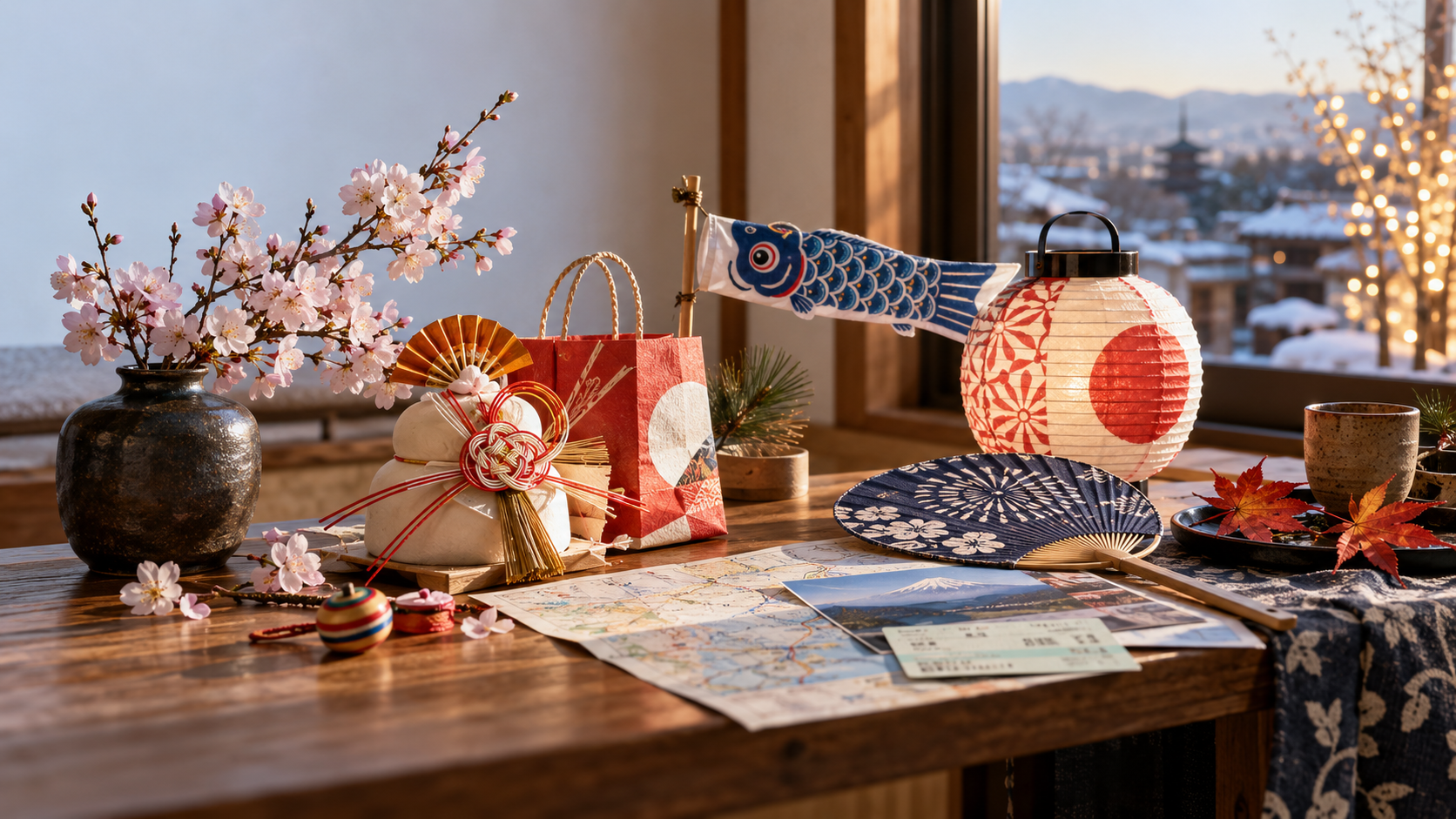
During the first few days of January, office districts in Japan are quiet and many independent businesses are closed. At the same time, trains leaving the major cities are crowded with people returning to their hometowns, while well-known shrines receive large numbers of visitors making their first prayers of the year. Department stores prepare their first sales, children receive envelopes containing money, and families eat foods that appear mainly during the New Year period.
An international app company looking only at the official holiday calendar would see January 1 marked as New Year’s Day, but that single date does not explain the travel, family routines, shopping, food, and business closures surrounding it.
The same problem appears throughout the year. Golden Week is not one holiday but a cluster of holidays that changes how the country travels. Obon is not an official national holiday, yet it affects transportation, family routines, business availability, and customer support. Christmas is widely marketed but is not a public holiday. Japan’s most important “back to school” moment happens in April, not August.
For app marketers, these differences affect seasonal creative, travel behavior, purchasing, media use, and the availability of local partners. Understanding the surrounding behavior is generally more useful than adding a familiar seasonal symbol to an advertisement without much context.
Japan currently has 16 named national holidays, but official holidays are only one part of the marketing calendar.
Some periods matter because people are legally off work. Others matter because schools are closed, families travel, stores run major promotions, or a cultural tradition changes what people eat and do. Major sporting and entertainment events create another kind of attention entirely.
For planning purposes, the calendar can be divided into four broad groups. The official national holiday calendar includes dates such as Coming-of-Age Day, Children’s Day, Marine Day, Mountain Day, Respect for the Aged Day, Sports Day, and Culture Day. Larger holiday periods include New Year, Golden Week, and Obon. Japan’s official tourism organization identifies these as the country’s three major domestic travel periods, even though Obon itselfis not a national holiday.
There is also a cultural and commercial calendar that includes Valentine’s Day, White Day, cherry-blossom season, Halloween, Christmas, school graduation, the April start of the new year, and winter bonus season. Alongside these is a live-event calendar covering the Hakone Ekiden, professional baseball, high-school baseball at Koshien, sumo tournaments, Tokyo Game Show, Comic Market, AnimeJapan, and large music festivals.
Companies entering Japan can use a combined version of these calendars when planning product launches, paid media, App Store creative, influencer campaigns, CRM, partnerships, and customer support. This is particularly helpful around periods when local teams and business partners maybe away.
In many countries, New Year is primarily a countdown followed by one day off. In Japan, it is a broader family, spiritual, retail,food, and travel period that begins before December 31 and continues throughthe first days of January.
The preparations are part of the experience. Homes and workplaces may undergo a major cleaning called osoji. On New Year’s Eve, or omisoka, people often eat toshikoshi soba. The name can be understood as “year-crossing noodles,” and the long noodles are associated with longevity and leaving the old year behind.
The food changes again after midnight. Many families eat osechi ryori, an assortment of New Year foods arranged in layered boxes. Individual foods carry symbolic wishes: black soybeans may represent health and diligence, herring roe may represent fertility and family prosperity, and sweet rolled omelet may be associated with learning or cultural accomplishment.
Another central tradition is hatsumode, the first shrine or temple visit of the year. People pray, purchase protective charms, draw written fortunes, and return old charms from the previous year. Some go just after midnight; others visit during the first three days of January. JNTO reports that Meiji Jingu in Tokyo receives approximately three million visitors for hatsumode, illustrating how large one location can become during the period.
Children may receive otoshidama,money placed inside small decorated envelopes by parents and relatives. Families also send nengajo, New Year postcards traditionally timed to arrive on January 1, although messaging apps and social media have reduced the role of physical cards.
The New Year shopping period also includes fukubukuro. The usual English translation is “lucky bag,” although that label does not fully explain the concept. A retailer places a selection of products into a bag and sells the bundle for less than the stated value of what is inside. Traditionally, customers accepted some mystery in exchange for the possibility of aparticularly valuable assortment. Modern fukubukuro range from inexpensive fashion and cosmetics bundles to premium packages sold by lottery or advance reservation. Some still hide the contents, while others reveal every product before purchase. Their appeal combines a discount, alimited New Year release, and an element of surprise.
Apps can adapt this idea in several ways. A game might offera New Year collection of cosmetic items, a subscription app might bundle several months with a premium feature, and a commerce app might create a limited package from partner brands. Paid randomized digital contents require careful review of platform policies, probability disclosures, and Japanese consumer law.
New Year can be especially relevant for fitness, finance, productivity, learning, journaling, family, photo, messaging, commerce, entertainment, and gaming apps. Year-in-review features can begin in December. Goal-setting and habit campaigns can follow in January. Family apps can help people share moments with relatives who could not travel home.
Many businesses close or reduce their hours from the end of December through the first several days of January. Campaign schedules and customer-support coverage need to account for the reduced availability of local teams during this period.
New Year is followed by several smaller moments that serve very different audiences.
Coming-of-Age Day takes place on the second Monday of January. Municipalities hold ceremonies for young people entering adulthood. Participants often wear formal clothing, take professional photographs, and reunite with former classmates. Japan lowered the legal age of adulthood from 20 to 18 in 2022, although many ceremonies continue to focus on the school-year cohort turning 20.
The occasion is relevant to products connected with finance, careers, formal wear, beauty, photography, and travel because it is framed around independence and entry into adult society.
In early February, Japan observes Setsubun, usually around February 3. Families and temples throw roasted soybeans while saying a phrase that calls good fortune in and drives demons out. Children may wear playful demon masks, and supermarkets sell ehomaki, thick sushi rolls eaten while facing the year’s auspicious direction.
Setsubun can look superficially similar to Halloween because of the demon masks, but its cultural meaning is closer to removing misfortune and welcoming spring. Campaigns connected to the occasion generally fit more naturally with luck, family participation, food, and seasonal change.
Valentine’s Day follows on February 14, but Japan’s gift-giving cycle traditionally extends for another month. Women historically gave chocolate to men on Valentine’s Day, while men returned a gift on White Day, March 14.
While giving romantic chocolate still exists, there are actually several other types of chocolates given out. These can be gifts for friends, chocolate bought for one self, products connected to a favorite actoror character, and gifts exchanged without traditional gender roles. At the same time, giri choco—the “obligation chocolate” once given to male coworkers—has weakened.
A 2025 Nippon Life survey reported by The Guardian found that only 12.5% of respondents planned to give sweets to colleagues, compared with almost one-quarter in 2020. More than 70% considered the obligation unnecessary. The same report cited average Valentinespending of ¥3,818 in 2025, down from ¥4,008 a year earlier. These are survey findings rather than national sales totals, but they show why a campaign centered only on women buying chocolate for male coworkers can feel dated.
Dating, messaging, commerce, restaurants, food delivery, photography, games, and fan-community apps can treat February 14 through March 14 as one campaign journey. Friendship, self-reward, fandom, and reciprocal gifting can all belong in the same period.
Winter is also examination season. Entrance exams, school applications, and cram-school schedules create pressure for students and families. Education, focus, sleep, wellness, scheduling, and family-organization apps may be relevant here, but the tone should recognize anxiety rather than turning exams into a cheerful decorative theme.
The school year begins in April. Many companies welcome new graduates at the same time. Japan’s fiscal year also begins on April 1, and March becomes a dense period of graduation ceremonies, moving, apartment searches, farewell gatherings, paperwork, and preparation for a new commute or routine.
A Western-style “back to school” campaign in August can therefore feel disconnected in Japan, where August is part of summer vacation.The main new-school, new-job, and new-life period runs from late March into early April.
The phrase shinseikatsu, or “new life,” is common in spring marketing, but the practical needs behind it are more useful for product planning. These may include managing a first salary, learning a new commute, organizing work, or adjusting to a new course of study.
March also includes Hinamatsuri on March 3. Often called Girls’ Day or the Doll Festival, it centers on wishes for girls’ health andhappiness. Families display ornamental dolls representing the imperial court and serve seasonal foods whose colors and ingredients carry spring associations.
Hinamatsuri may be relevant to family, photo, parenting, cooking, grocery, craft, and children’s apps. Its significance comes from the combination of the dolls, family ritual, seasonal food, and wishes for a child’s healthy growth.
Cherry-blossom season begins around the same period. Although it is often presented internationally as a visual motif, it also involves practical questions of timing. The sakura front moves north as blossoms open in different regions, and forecasts track first bloom and full bloom. Rain, wind, temperature, weekends, and local crowding can determine whether people gather beneath the trees.
The custom of hanami literally means flower viewing, but it commonly involves much more than looking at flowers. Friends, families, and coworkers may reserve a place in a park, bring food and drinks, take photographs, and spend several hours together.
The economic effect can be large, although estimates should always be labeled clearly. A 2025 analysis by Kansai University economist Katsuhiro Miyamoto placed the nationwide economic impact of that year’s cherry-blossom viewing season at approximately ¥1.39 trillion. Separately, Japan received 3.5 million international visitors in March 2025, with cherry-blossom demand contributing to the month’s travel activity.
Travel, maps, weather, camera, photo-editing, transit, restaurant, food-delivery, and social apps can connect forecasts to saved locations, picnic planning, congestion information, or photo templates. Becausethe season moves across the country, a nation wide campaign fixed to one week will be early for some users and late for others.
Golden Week is not one holiday. It is a cluster of four national holidays between April 29 and May 5: Showa Day, Constitution Memorial Day, Greenery Day, and Children’s Day. Weekends and substitute-holiday rules can extend the break. In 2026, May 6 also became a holiday because of those rules.
The shape of Golden Week therefore changes each year. When the calendar aligns well, employees can create a long vacation by using only a small amount of paid leave. When it aligns poorly, the holiday is more fragmented.
The travel effect is still substantial. JTB’s 2026 forecast estimated approximately 24.5 million Japanese travelers during its defined Golden Week window and approximately ¥1.3 trillion in total travel expenditure.The figures are forecasts based on a particular survey and date range, not permanent annual totals, but they show the scale companies may be planning around.
Popular trains, flights, highways, hotels, theme parks, and tourist areas become busy. People who remain at home may have more time for games, streaming, shopping, and local outings. At the same time, B2B communication and ordinary business approvals can slow considerably.
The final holiday in the cluster is Children’s Day on May 5. Families may display koinobori, carp-shaped streamers that symbolize strength and perseverance, and decorative warrior helmets. Although the holiday developed from a tradition associated with boys, its modern legal purpose concerns the happiness of all children and gratitude toward mothers.
For family, education, games, photography, retail, health, travel, and local-discovery apps, Children’s Day can provide a useful focus within the wider Golden Week period. Performance should still be interpreted inthe context of altered routines. A family may be traveling, visiting grandparents, or spending much less time following its normal weekday pattern.
Mother’s Day follows on the second Sunday in May, while Father’s Day takes place on the third Sunday in June. Neither is a national holiday, but both are established gifting occasions. Apps that depend on delivery should make order deadlines exceptionally clear. Family and photo apps can focus on connection across distance, while recognizing that not every family has the same structure.
Summer in Japan is not one continuous vacation. Several overlapping periods create different kinds of behavior.
The first is tsuyu, the rainy season, which generally affects much of the country between early June and mid-July. Its timing varies by region and year, and Hokkaido is less affected by the classic pattern.
The rainy season is not a holiday, but it can influence daily behavior for weeks. Humidity rises, outdoor plans become less reliable, laundry becomes harder to dry, and umbrellas become part of everyday movement. Indoor entertainment, games, streaming, home fitness, learning, delivery, commerce, transit, weather, and wellness apps can all become more relevant.
Weather-aware messaging is usually more useful than a fixed rainy-season campaign. A notification based on rain expected in the user’s area has a clear purpose, while the same message sent nationwide may be irrelevant in places where the weather is different.
Tanabata follows in July, although some regions celebrate it in August. The festival comes from a story about the separated lovers Orihime and Hikoboshi, represented by the stars Vega and Altair, who are permitted to meet once a year. People write wishes on colored strips of paper and hang them from bamboo. Sendai’s Tanabata Festival, held from August 6 to 8, attracts more than two million visitors in a typical year, according to JNTO.
Summer also brings matsuri and fireworks. The word matsuri is usually translated as festival, but it does not refer to one standardized type of event. A festival may be connected to a neighborhood shrine, a temple, a historical incident, a harvest, a dance tradition, or a local protective deity. Food stalls, processions, portable shrines, performances, and fireworks vary from place to place.
People may wear yukata, light cotton robes associated with summer festivals and hot-spring towns. Describing a yukata simply as a costume misses its place as seasonal clothing that can be rented, purchased, styled, photographed, and worn as part of the event.
Summer festivals may be relevant to camera, maps, weather, transit, food, travel, and event-discovery apps. Because the dates and customsare local, campaigns work best when they are tied to a real event rather than ageneric image of a Japanese festival.
Japan does not have one centrally fixed school-holiday calendar. Local boards of education and individual institutions set their own dates, while private schools, universities, and international schools may follow different schedules.
At most public schools, summer vacation covers roughly 40 days from around July 20 through August 31. Winter vacation lasts about 10 days from approximately December 26 to January 6, while spring vacation lasts about 10 days from approximately March 25 to April 5. Northern regions may shorten summer break and lengthen winter break because of the climate.
Summer vacation does not mean children have no obligations.Students may receive substantial homework, complete independent research projects, attend school-club practices, compete in sports, or go to juku, private supplementary schools commonly described as cram schools.
This gives games and entertainment apps a larger youth audience, but it also creates opportunities for reading, education, tutoring, planning, habit tracking, family scheduling, and creative tools. Companies marketing to children need to pay close attention to Japanese privacy, advertising, payment, and platform requirements.
Heat has also become impossible to ignore. Japan’s government publishes heat-stroke warnings and a national heat-risk information service. An app should be cautious about encouraging outdoor challenges or long festival journeys without recognizing local temperature and safety conditions.
Obon is commonly observed around August 13 through 16, although some areas observe it in July. The period centers on welcoming and honoring ancestral spirits. Families may return to their hometowns, visitgraves, clean family memorials, make offerings, and take part in Bon dances.
The dances and lanterns can make Obon visually festive, butit is not a Japanese version of Halloween. Remembrance and family continuity are central to the period.
JNTO places Obon alongside New Year and Golden Week as one of Japan’s three busiest domestic travel seasons. Trains, airports, and highways carry people away from the major cities toward family homes and then back again. Some businesses close or operate with smaller teams even though the dates are not official national holidays.
For travel, navigation, payments, family, photo, delivery, entertainment, and communication apps, Obon can be highly relevant. It should also appear on the operational calendar. Partner availability, fulfillment cutoffs, app release timing, and customer-support staffing may all be affected.
September can create another travel period when Respect for the Aged Day and the autumnal equinox align with weekends and Japan’s holiday rules. The result is known as Silver Week.
Unlike Golden Week, Silver Week is not equally large every year. In 2026, Respect for the Aged Day fell on September 21 and Autumnal Equinox Day on September 23. The date between them became a holiday, creating five consecutive days off when combined with the weekend.
International teams should therefore confirm the September calendar each year rather than duplicate the previous campaign plan.
Autumn foliage then becomes a long, moving travel season. The leaves begin changing in cooler northern and high-altitude areas and movesouth, often continuing into late November or early December in some cities.The activity of going out to admire the leaves is sometimes called momijigari, literally “hunting forautumn leaves.”
The marketing pattern resembles cherry-blossom season.Travel, maps, camera, restaurants, weather, events, and outdoor apps can remainrelevant for several months, but regional timing matters.
On November 15, families observe Shichi-Go-San, literally “seven-five-three.” The traditioncelebrates children at ages historically associated with important stages ofgrowth. Families may dress children in formal kimono or Western clothing, visita shrine, take professional photographs, and give chitose ame, “thousand-year candy” symbolizing a long and healthylife. Celebrations often take place on a nearby weekend rather than exactly onNovember 15.
For photo, cloud-storage, family, formalwear, maps,local-service, scheduling, and gifting apps, the strongest role is oftenpreservation and sharing. Grandparents or relatives who cannot attend can stillbe part of the milestone.
Halloween arrives two weeks earlier, on October 31. It isnot a public holiday, and household trick-or-treating is less central than itis in North America. Japan’s Halloween developed through theme parks, retail,costumes, character merchandise, seasonal food, nightlife, and urbangatherings.
Games, entertainment, avatars, camera effects, commerce,delivery, and social apps can participate naturally. However, large streetgatherings have created crowd and public-drinking concerns in areas such asShibuya. A brand should not encourage behavior that local authorities areactively trying to control.
Late November also brings Black Friday. This is an importedcommercial event rather than a Japanese tradition, but major retailers andonline marketplaces have made it a recognizable discount period. For mostcompanies, it should lead into a longer spending period that includes winterbonuses, Christmas, year-end gatherings, New Year travel, and first sales.
Christmas is highly visible in Japan. Shopping centersinstall large trees, cities hold illumination events, restaurants offer specialmenus, convenience stores and hotels sell Christmas cakes, and theme parksbuild seasonal programs.
Yet December 25 is not a national holiday, and the culturalrole of Christmas differs from countries where it is primarily a religious orextended-family holiday. Couples, dates, gifts, limited-edition food, winterlights, and entertainment are particularly visible. Most offices and schoolsoperate normally unless the date falls on a weekend or the institution hasalready begun its winter break.
Dating, restaurant, reservation, delivery, commerce, photo,travel, streaming, and gaming apps can use the period effectively.International teams should not assume a multi-day business closure or importreligious language that does not match the local audience.
Many employees also receive a winter bonus, although theamount, date, and eligibility vary greatly by company and employment type. Thatcan support higher-consideration purchases, travel, gifting, saving, orself-reward, but marketers should not present bonus income as universaldisposable cash.
December is also the season for bonenkai. The term is often translated as a “forget-the-yearparty”: coworkers, teams, clients, or friends gather to leave the old year’sdifficulties behind. Restaurants, bars, reservation services, transportation,payments, expense tools, and group-planning apps can all become more relevant.
Japan’s December marketing calendar does not end withChristmas. For many categories, Christmas is only the first stage of a largerjourney through bonuses, parties, homecoming travel, family gatherings, NewYear traditions, and January’s first sales.
No sporting event is followed by everyone in Japan, and liveattendance depends on tickets and geography. However, several properties havebroad recognition or particularly strong audiences and are useful referencepoints for companies entering the market.
On January 2 and 3, university runners race from centralTokyo to Hakone and back in the Hakone Ekiden. Ten runners from each universitycover more than 200 kilometers across two days, including mountain sectionsthat can completely change the result.
The event occupies a powerful place in the calendar becauseit airs during the quiet New Year period. Families can watch for hours whileeating, resting, or visiting relatives. Viewers follow universities, individualrunners, comeback stories, coaching decisions, shoes, and the scenery along theroute.
For the 2025 race, average household television ratings inthe Kanto region reached 27.9% on January 2 and 28.8% on January 3. The winningmoment reached 34.1%.
Japan’s professional baseball season runs from spring intoautumn. Nippon Professional Baseball has 12 teams with strong regionalidentities and large local fan communities. Attention rises around Opening Day,rivalry games, interleague play, the All-Star series, the pennant race, theClimax Series, and the Japan Series championship.
The regional dimension can be as useful as the nationalaudience. A team partnership may help a delivery, mobility, finance, dating,ticketing, travel, or local-commerce app become visible in one market, whilethe length of the season provides repeated exposure.
Koshien is the common shorthand for Japan’s nationalhigh-school baseball tournaments at Hanshin Koshien Stadium. The springinvitational takes place in March, while the larger summer championship takesplace in August.
The summer tournament combines sport with regional identity.Schools represent their prefectures, student bands and cheering sections travelto the stadium, and local communities follow teams that may have little chanceto appear on a national stage elsewhere. Stories about effort, teamwork,pressure, and the final summer of a student’s school career are central to itsemotional appeal.
The 2025 summer championship began on August 5 and wasscheduled across 18 days, subject to weather.
Professional sumo holds six 15-day grand tournaments eachyear: Tokyo in January, May, and September; Osaka in March; Nagoya in July; andFukuoka in November.
The ranking system, stable affiliations, ceremonialentrances, daily progression, and possibility of promotion or demotion makesumo different from a one-day spectacle. Fans may follow the tournament for twoweeks, with demand often highest on weekends and the final day.
Official J.League matches drew a record 13,503,210 attendeesduring the 2025 season, up from 12,540,265 in 2024.
Football can therefore support city-level marketing. Clubidentities, supporter cultures, community activities, and rivalries differsignificantly, so the details of the local club and audience should guide apartnership.
National-team football, international baseball, the TokyoMarathon, the Formula 1 Japanese Grand Prix at Suzuka, and major horse racessuch as the Japan Cup and Arima Kinen also attract substantial audiences. Theirdates and ticket systems change, so they need to be added to the calendarannually.
For every sports opportunity, rights matter. Event names,footage, team marks, university marks, athlete likenesses, and broadcastcontent are not freely available merely because the event is culturallyprominent.
Japan’s entertainment audiences are divided across anime,games, music, idols, film, and independent creators. Several events are verylarge within their respective communities, so their relevance depends on theparticular audience an app wants to reach.
Tokyo Game Show is Japan’s flagship game-industryexhibition. It combines business meetings, public exhibition days, playablegames, new announcements, stage programs, creators, merchandise, esports, andonline broadcasts.
The 2025 event attracted 263,101 in-person visitors.Organizer CESA also reported approximately 10.14 million views of officialprograms.
For a game or adjacent app, the opportunity begins monthsbefore the doors open. Announcement timing, booth planning, creatorpartnerships, media appointments, App Store creative, community events, andpaid acquisition all need to work together.
Comic Market, usually called Comiket, is held at Tokyo BigSight in summer and again near the end of December. It is often describedinternationally as an anime convention, but that misses its central purpose.
Comiket is a marketplace for fan-created and independentlyproduced work. Circles sell dojinshi—self-publishedcomics, books, music, games, and other creations—while cosplayers, fans, andcorporate exhibitors participate around them. The culture of making,publishing, collecting, and meeting creators is fundamental to the event.
The summer 2025 C106 edition drew approximately 250,000visits over two days, while the winter C107 edition drew approximately 300,000,according to event reports. Tickets or wristbands are required, genres changeby day, and summer heat can make preparation a serious safety issue.
Drawing, creator, camera, payments, navigation,entertainment, commerce, and community apps may find an authentic role. Brandsalso need to respect the complicated intellectual-property environment aroundfan works.
AnimeJapan brings studios, publishers, streaming platforms,performers, merchandise, and upcoming titles together at Tokyo Big Sight. The2024 edition reported an estimated 132,557 visitors. The 2025 event included arecord 116 exhibitor booths and 52 stage events across four stages.
For companies working in streaming, games, manga,entertainment media, commerce, or fan communities, AnimeJapan is relevant tothe annual release and partnership calendar as well as to on-site advertising.
Fuji Rock takes place at Naeba Ski Resort in Niigata.Despite the name, it is not held near Mount Fuji. The event is a destinationfestival involving transportation, lodging or camping, mountain weather, food,merchandise, and several days of performances.
The official event history reports 122,000 total visitsacross the pre-party and festival days in 2025, with more than 200 artists fromJapan and abroad.
Japan’s wider summer music calendar includes Summer Sonicand many genre-specific events. Attendees also need transportation,accommodation, weather information, payments, and other services around theperformance itself.
On December 31, NHK broadcasts Kohaku Uta Gassen, a live music program in which prominent artiststraditionally perform as part of red and white teams.
The competitive framing is only part of its importance. Aninvitation to appear can signal that an artist has entered the mainstream,while the lineup generates discussion about the year’s music and culture. Theprogram no longer has the overwhelming audience share it commanded in earlierdecades, but it remains one of Japan’s most recognizable year-end mediatraditions.
For music, video, messaging, social, delivery, andsecond-screen apps, the program sits inside a much larger New Year’s Everoutine. Commercial use of the program, artists, songs, or broadcast materialstill requires permission.
A company does not need a campaign for every occasion in thecalendar. A family app may have a natural role during New Year, Children’s Day,Obon, Shichi-Go-San, graduation, and family travel. A weather app may be usefulduring cherry-blossom season, the rainy season, summer festivals, and typhoondisruptions. A game may find relevant opportunities around New Year bundles,Golden Week, summer vacation, Halloween, Tokyo Game Show, and Comic Market. AB2B security product will use the calendar differently, with more emphasis onlaunch timing, staffing, and partner availability.
The relevance of the event should determine whether a brandcommunicates, while its operational effect should determine whether the companyprepares.
Some dates matter mainly for operations. A company maydecide against running an Obon campaign while still planning for partnerabsences, or avoid placing an approval-heavy enterprise launch in the middle ofGolden Week. A game company may also need to account for Tokyo Game Show evenwhen it is not an exhibitor or sponsor.
Planning also needs to begin early enough to match userbehavior. Travel inspiration and reservations happen before Golden Week orObon, while gift discovery happens before the delivery deadline. Custom AppStore product pages need to be ready before paid traffic begins, and influencerpartnerships need time for cultural and rights review.
Regional timing matters as well. Cherry blossoms, autumnfoliage, the rainy season, snowfall, extreme heat, and local festivals do nothappen simultaneously across the country. Dynamic creative andlocation-specific notifications can turn seasonal localization into somethinguseful.
Finally, every number needs a date and a definition. Atravel forecast is not an audited result. An economic-impact estimate is notthe same as retail sales. An event’s cumulative attendance across several daysis not the number of unique people who attended.
Japan’s annual events are useful to app marketers becausethey show when routines, travel, purchasing, and media attention change. Themost appropriate opportunities are the ones where the product can help,entertain, connect people, or add something relevant to the experience. Thecampaign, App Store page, and app should then present that role consistently.
Sports marketing gives apps a unique way to reach highly engaged audiences, from local stadium crowds to millions of fans watching major events around the world.
ReadApple Ads Tips for Japanese Gaming Companies Expanding to the US and Global Markets
ReadExperience the future of app marketing with V.O.X.
Where visibility meets opportunity.
%20(2).png)

.png)
.png)
.png)